
FAD-GDH — the "Gold Standard" enzyme for glucose meters
The term FAD-GDH (or GDH-FAD) stands for Flavin Adenine Dinucleotide-dependent Glucose Dehydrogenase. It is a key enzyme used in modern electrochemical biosensors, particularly in test strips for glucose meters. FAD-GDH is responsible for the electrocatalytic reaction that allows the device to calculate the glucose concentration in the blood.
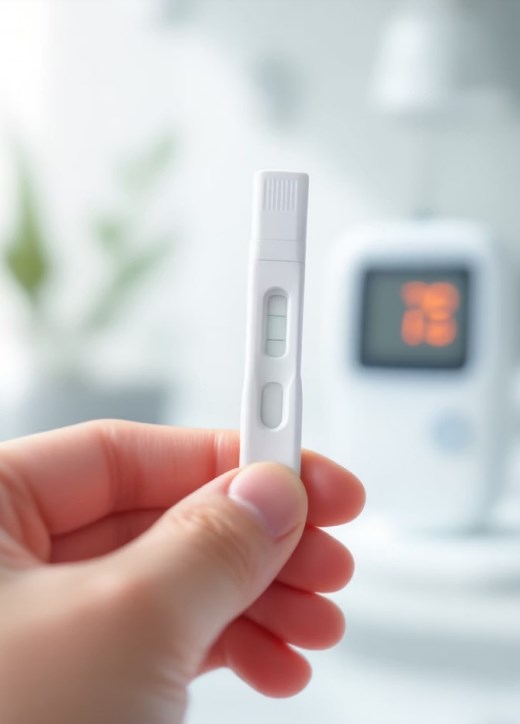
Why FAD-GDH is important

- High specificity for glucose — minimal cross-reactivity with maltose and galactose.
- Oxygen independence — measurement accuracy regardless of oxygen saturation, including in clinical settings.
- Thermostability and broad pH activity range (active at pH 3.5-9.0) — enhanced reliability and strip shelf life.
- Fast kinetics — analysis time of 4-6 seconds.
These properties make FAD-GDH the preferred choice for home and clinical use, especially where avoiding false results in patients with concomitant conditions is critical.
Design and working principle of FAD-GDH test strips
The blood drop lands on the porous area of the strip containing dry reagents and the FAD-GDH enzyme.
FAD-GDH catalyzes glucose oxidation, during which the enzyme accepts electrons from the glucose molecule.
The enzyme transfers electrons to a mediator, which mobilizes them to the electrode.
The electrode generates an electrical signal (current) proportional to the glucose concentration — the meter calculates the glucose value from the current strength.
Unlike GOD (glucose oxidase), FAD-GDH does not use oxygen as an electron acceptor, eliminating errors related to oxygen concentration in the sample.

Evolution of biosensor technologies
Genetic engineering has enabled the industrial-scale production of recombinant FAD-GDH forms from the genera Aspergillus and Mucor, combining the advantages of fungal and bacterial enzyme properties.
Major manufacturers and applications
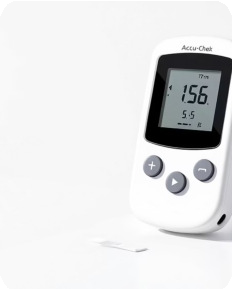
Accu-Chek (Roche)
Almost all modern models (Accu-Chek Instant, Performa, Guide) use FAD-GDH-based strips.
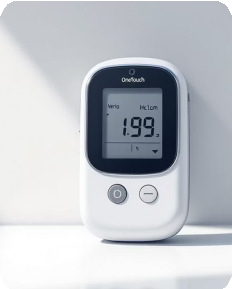
OneTouch (LifeScan)
The OneTouch Select Plus, OneTouch Verio, and Ultra Plus Flex models operate on FAD-GDH technology.

Contour (Bayer)
The Contour Plus and Contour TS lines use this enzyme.

Freestyle (Abbott)
Most Freestyle models work with FAD-GDH.
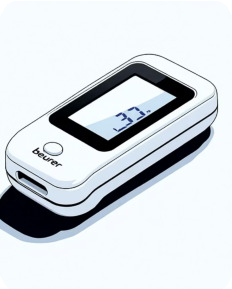
Beurer
The Beurer GL 50 evo model uses FAD-GDH.
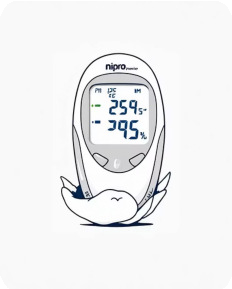
Nipro (Japan)
The Premier series uses FAD-GDH.
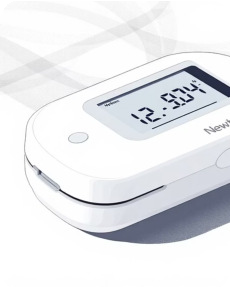
Wellion (Austria)
The Newton FAD-GDH model is based on this technology.
Advantages and limitations: a comparative analysis
- High accuracy and specificity — no reaction with maltose and galactose.
- Oxygen independence — reliable results even at low oxygen saturation.
- Wide temperature-pH range — stable storage and operation.
- Fast measurements — results in 4-6 seconds.
- Sensitivity to D-xylose — possible inaccuracies during absorption tests.
- Influence of certain medications and solutions (e.g., icodextrin, immunoglobulins) — rare interferences.
- Cost — producing recombinant FAD-GDH and high-precision strips is more expensive than older GOD strips.
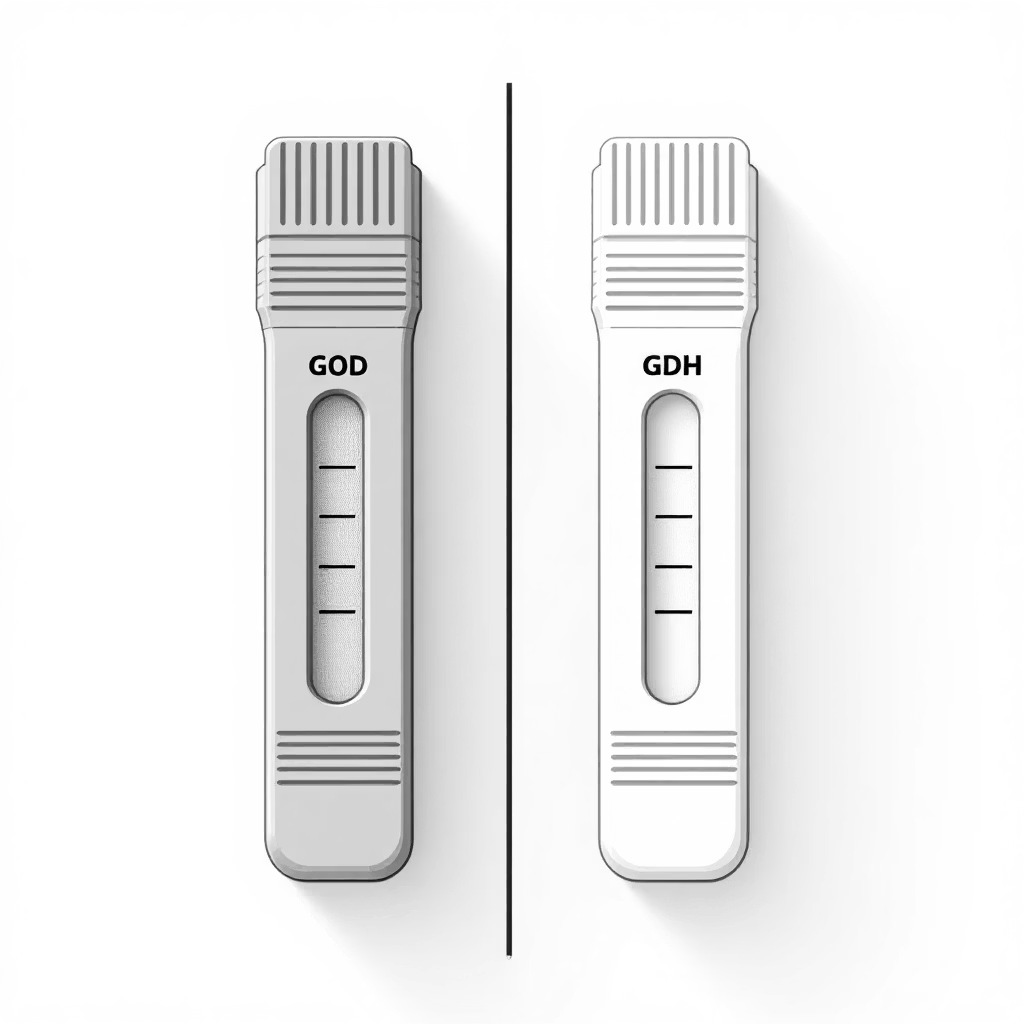
Overall, FAD-GDH technology represents an optimal balance of accuracy, interference resistance, and practical usability. For most clinical and home scenarios, the advantages significantly outweigh the disadvantages.

Conclusion and clinical significance
FAD-GDH technology is now considered the "gold standard" for home diabetes monitoring, replacing older methods that are oxygen-dependent or prone to interference. It is widely used by leading global manufacturers and provides:
- improved measurement accuracy in various clinical settings;
- resilience to external factors (temperature, pH, oxygen levels);
- rapid results and reliability in hospitals and during dialysis.
Why choose A2V?
every day
Where to buy?
- Almaty
- Astana
- Shymkent
- Karaganda
- Aktobe
- Taraz
- Pavlodar
- Oskemen
- Semey
- Atyrau
- Kostanay
- Kyzylorda
- Oral
- Petropavlovsk
- Aktau
- Temirtau
- Turkistan
- Kokshetau
- Taldykorgan
- Ekibastuz
- Rudny
- Zhezkazgan
- Balkhash
- Satpayev
- Zhanaozen
- Kentau
- Arkalyk
- Aksai
- Shakhtinsk
- Kaskelen

FAQ
automatic coding, lifetime warranty, expiration date, error troubleshooting. Everything you need to know!